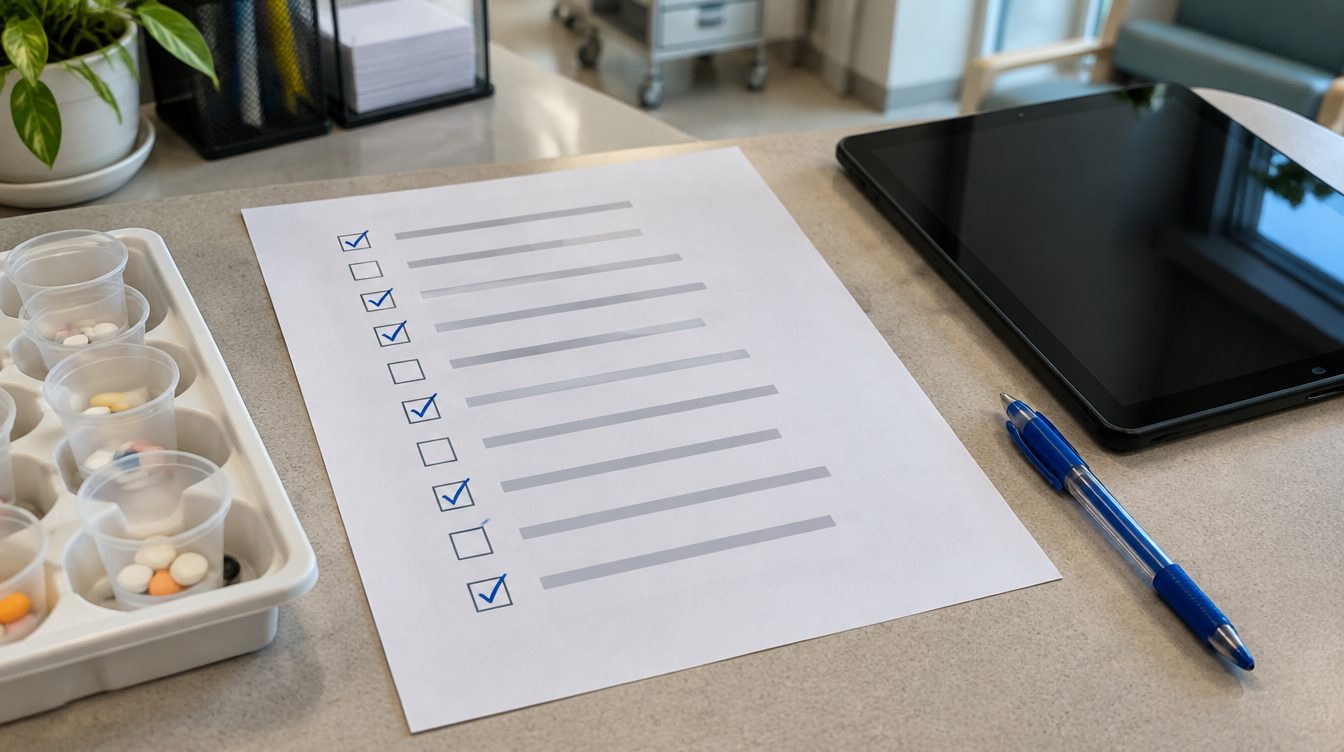
In its Sentinel Event Alert on hand-off communication, The Joint Commission lists 10 items every hand-off should include, from sender contact information to dated vital signs. Most skilled nursing facilities aren't surveyed by The Joint Commission, but the list is still the clearest standard available. Applied to a SNF shift, the hard part isn't knowing the list. It's that the 10 items live in different places in the chart.
In 2017, The Joint Commission published Sentinel Event Alert 58 on inadequate hand-off communication. Its finding was blunt: hand-offs fail when the receiver gets information that is inaccurate, incomplete, late or misread, and those failures contribute to falls, medication errors and delays in treatment.1 The alert cites research linking communication failures to 30% of malpractice claims, 1,744 deaths and $1.7 billion in costs over five years.1
The alert also gave facilities something practical: a minimum list of what every hand-off should carry. It's the closest thing to a shared standard for shift report, and it maps cleanly onto a skilled nursing unit.
Does this apply to skilled nursing facilities?
The Joint Commission's hand-off standard applies to the nursing care centers it accredits, as well as hospitals.1 Most skilled nursing facilities, though, are surveyed by state agencies for CMS rather than accredited by The Joint Commission. That doesn't make the list less useful. It's simply the best-documented answer to the question every DON eventually asks: what should our shift report actually include?
What are the 10 items, and where do they live on a SNF unit?
| Joint Commission item | On a SNF shift, that means | Usually found in |
|---|---|---|
| 1. Sender contact information | Who gave report and how to reach them after they leave | Often nowhere; it's verbal |
| 2. Illness assessment, including severity | Who is the sickest resident on the assignment right now | The nurse's head; progress notes |
| 3. Patient summary | Why they're here, how the stay is going, the plan of care | Referral packet, care plan, recent notes |
| 4. To-do action list | What's due this shift: meds, wound care, calls, follow-ups | MAR, treatment records, orders |
| 5. Contingency plans | If this happens, do that, and who to call | Rarely written down |
| 6. Allergy list | Confirmed allergies and reactions | Face sheet, hospital records |
| 7. Code status | Full code, DNR, POLST and goals of care | Advance directives, face sheet |
| 8. Medication list | Current meds and what changed recently | MAR, physician orders, pharmacy |
| 9. Dated laboratory tests | Recent results with dates, plus anything pending | Lab portal, hospital packet |
| 10. Dated vital signs | The trend, not just the last reading | Vitals flowsheet |
Look at the third column. Ten items, seven or eight different places, plus two that often aren't written down at all. That is why a nurse with fifteen minutes and six residents can know the list perfectly and still miss something.
What else does the alert recommend?
- Talk, don't just write. Avoid hand-offs that are only paper or electronic. Face to face is best, with time for questions.1
- Pull it together first. The alert specifically recommends synthesizing information from different sources rather than passing them along separately.1
- Use a structure. Mnemonics like I-PASS help, backed by training. In hospitals, I-PASS was linked to 30% fewer preventable adverse events.2 See our comparison of SBAR, I-PASS and ISBAR for nursing homes.
- Build it into the EHR workflow and measure it. Once a standard process exists, make it part of the record system staff already use, and track where hand-offs break down.1
How can AI help a SNF meet the checklist?
The alert's own advice to synthesize information from disparate sources describes what ChartRail does. Before the shift, a private model reads the chart, notes and referral documents and assembles the checklist items for each resident, each one cited to the page it came from, so the conversation at report can focus on judgment: who's sickest, what to watch, and what to do if it changes. It works from the EHR the facility already has, and resident data stays in the facility's own environment. For the bigger picture, read why shift handoff is the riskiest 15 minutes in skilled nursing.
Frequently asked questions
What does The Joint Commission say a hand-off should include?
Sentinel Event Alert 58 lists sender contact information, illness assessment including severity, a patient summary, a to-do action list, contingency plans, allergy list, code status, medication list, dated laboratory tests and dated vital signs.
Does The Joint Commission hand-off standard apply to nursing homes?
The hand-off standard (PC.02.02.01) applies to the nursing care centers The Joint Commission accredits. Most skilled nursing facilities are surveyed by state agencies for CMS instead, but the 10-item list remains a widely used standard for what a hand-off should include.
What is Sentinel Event Alert 58?
Sentinel Event Alert 58, published by The Joint Commission in September 2017, addresses inadequate hand-off communication: its causes, its link to adverse events, and seven recommended actions for health care organizations.
How long should a nursing shift handoff take?
There is no fixed standard. The goal is to cover the critical items for every resident with time for questions, which is easier when the information is gathered before report instead of during it.
Book a 30-minute demo with our founders, or ask about our design partner program.
Book a demo